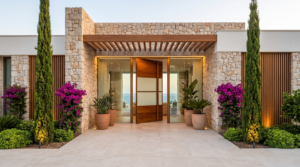
In Marbella, a property can be worth considerably more than its address, its architecture or its number of square metres suggest.
For buyers, this is one of the most important distinctions to understand when entering the luxury market. For sellers, it can be the difference between simply placing a property on the market and positioning it to achieve its full potential.
Marbella is no longer simply a destination for second homes. It has evolved into one of Europe’s most established luxury residential markets, attracting international buyers seeking a combination of lifestyle, privacy, connectivity and long-term value.
Current market data reflects that strength. Marbella’s average asking price reached €5,950 per square metre in July 2026, according to idealista, with prices continuing to rise year on year. In the premium segment, the numbers are significantly higher: properties valued above €3 million in Marbella averaged €7.4 million in 2024, while 18% of luxury transactions exceeded €10 million.
Yet headline prices tell only part of the story.
For sophisticated buyers and owners, the more interesting question is not simply “What is this property worth?”
It is: “What creates its value, and what part of that value may not be immediately visible?”
The address is only the beginning
In Marbella, location has an unusually granular effect on value.
Two villas can be only a few minutes apart and yet appeal to entirely different segments of the market. Sea views, proximity to the Golden Mile, access to international schools, golf, dining and retail, privacy, road access and the character of the surrounding community can all influence how a property is perceived.
This is why a simple price-per-square-metre comparison can be misleading in the upper end of the market.
In May 2025, for example, idealista recorded average asking prices of €6,422 per square metre in Nagüeles–Golden Mile and €5,578 per square metre in Nueva Andalucía, while other Marbella areas experienced substantially different rates of growth.
For a buyer, understanding these micro-markets is essential.
For a seller, it means that the correct comparable property is not necessarily the villa next door. It may be a property with a similar orientation, privacy profile, plot characteristics, renovation standard and buyer demographic — even if it is located elsewhere.
In Marbella, location is not a postcode. It is a collection of attributes.
Views can be an asset, but the quality of the view matters
A sea view is not simply a feature to mention in a listing.
In the luxury market, it can form part of the property’s identity.
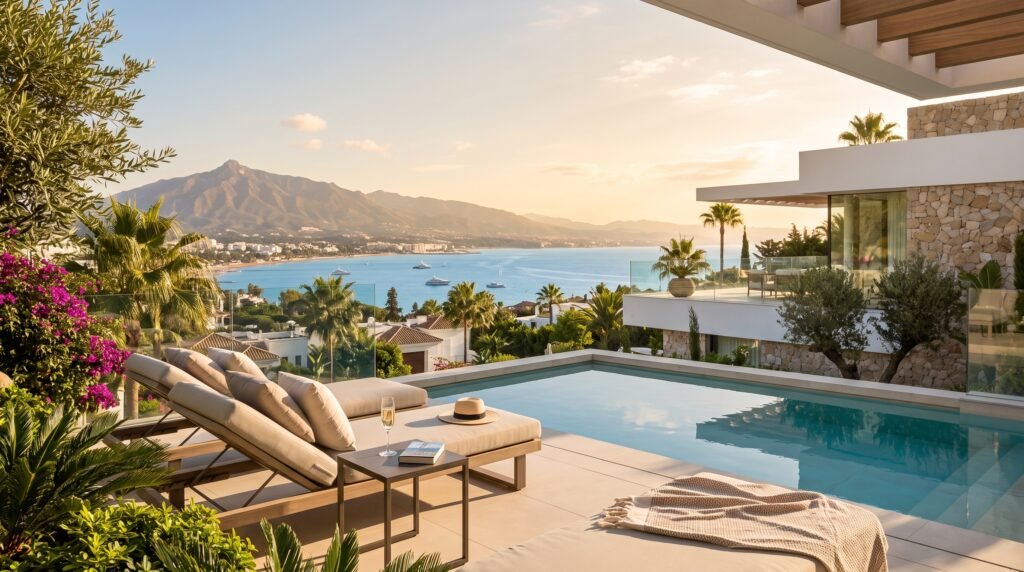
But not all views carry the same weight. A protected panoramic view across the Mediterranean is fundamentally different from a partial glimpse of the sea between neighbouring buildings.
The same applies to mountain, golf-course and open-country views.
Sophisticated buyers increasingly assess not only what they can see today, but also what they are likely to see tomorrow.
Planning restrictions, neighbouring plots, building density and the potential for future development can therefore influence the long-term value of a view.
This is one of the reasons local expertise matters so greatly in Marbella. A photograph can demonstrate a view. It cannot necessarily explain its permanence.
Privacy has become a form of luxury
Luxury has changed.
For many high-net-worth buyers, the most valuable feature of a property is no longer simply its size or the number of amenities it contains. Privacy, discretion and effortless living can be equally important.
A villa with a smaller built area but exceptional privacy, mature landscaping and carefully considered positioning may be more desirable than a substantially larger property exposed to neighbouring homes or passing traffic.
This is particularly relevant in Marbella, where the prime market includes international buyers accustomed to exceptional standards of privacy.
The value of privacy is also difficult to capture in conventional property metrics.
It cannot be reduced to a figure in €/m². It is part of the experience of owning the property.
Architecture and design create value beyond aesthetics
A well-designed property does more than look impressive.
It determines how the property is experienced.
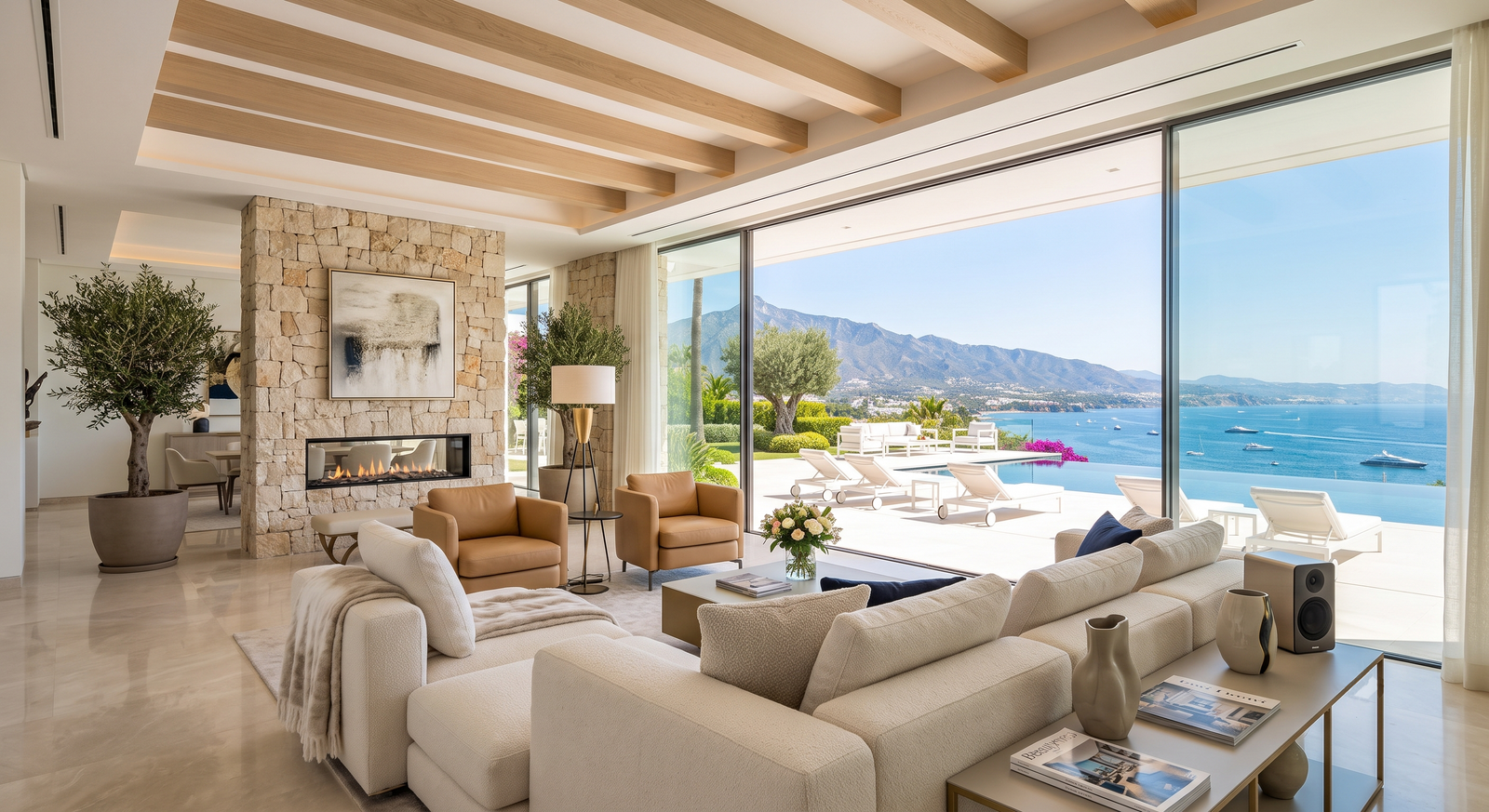
Natural light, orientation, indoor-outdoor flow, ceiling heights, proportions, terraces, circulation and the relationship between living spaces and gardens can have a profound effect on desirability.
In the luxury segment, this becomes increasingly important because buyers are not simply comparing houses. They are comparing lifestyles.
A contemporary villa with seamless indoor-outdoor living, for example, may command a premium because it responds directly to the way Marbella is lived: long periods outdoors, entertaining, dining al fresco and making use of terraces and gardens throughout much of the year.
The most valuable design decisions are often the least obvious ones.
The plot may be more valuable than the house
Luxury buyers should look beyond the existing building.
The land itself can represent a significant component of a property’s long-term value, particularly when the plot offers privacy, orientation, mature landscaping, desirable views or potential for redevelopment.
This distinction becomes particularly relevant when comparing older villas with newly built properties.
A dated house on an exceptional plot may present a very different investment proposition from a beautifully finished villa on a less strategically positioned piece of land.
For the buyer, the question is therefore not simply:
“Do I like the house?”
It should also be: “What am I actually acquiring?”
In some cases, the answer is an architectural residence. In others, it is a privileged piece of Marbella real estate with multiple possible future uses.
The property’s legal and technical position is part of its value
One of the least glamorous aspects of luxury property can also be one of the most financially important: documentation.
Planning status, licences, title, cadastral information, built areas, extensions, permits and other legal or technical considerations can materially affect the attractiveness of a property.
A property that appears exceptional during a viewing may become considerably less attractive if its documented situation does not correspond with what exists physically.
For buyers, due diligence is therefore not simply a legal formality. It is part of understanding the asset.
For sellers, preparing this information before going to market can help eliminate uncertainty, reduce friction during negotiations and give prospective buyers greater confidence.
In Andalusia, property transactions are subject to specific tax and documentary requirements, with the Junta de Andalucía currently stating a general 7% rate for the Transfer Tax applicable to qualifying property transactions, while new-build purchases generally involve VAT and the corresponding stamp-duty regime.
The precise tax treatment depends on the nature of the transaction and the circumstances of the buyer and seller, which is why professional legal and tax advice should always form part of a significant acquisition.
Energy efficiency and running costs increasingly matter
A luxury property is an asset, but it is also a living environment.
Large villas can involve substantial energy consumption, particularly when they include extensive glazing, multiple climate-control zones, swimming pools, landscaped gardens and sophisticated home technology.
As buyers become more conscious of operating costs and sustainability, the efficiency of the underlying systems can influence the property’s appeal.
Heating and cooling systems, insulation, solar technology, glazing, water management and smart-home infrastructure may not be as visually impressive as a designer kitchen or infinity pool, but they can materially affect the ownership experience.
The most desirable luxury properties increasingly combine visual impact with intelligent performance.
The quality of the renovation can be more important than the age of the property
“New” does not automatically mean “better”. An older Marbella villa that has been comprehensively renovated to contemporary standards can compete extremely effectively with a new-build property — particularly when it combines an established location, mature gardens and a proven sense of privacy.
Equally, cosmetic refurbishment should not be confused with structural or technical modernisation. For buyers, understanding what has actually been upgraded is essential. For sellers, this means presenting renovation history clearly and professionally rather than simply describing a property as “fully renovated”.
The distinction between decoration and genuine improvement can have a significant impact on perceived value.
International demand creates another layer of value
Marbella’s buyer pool is global. That matters because the definition of a desirable property can vary considerably between nationalities, cultures and generations of wealth.
According to the Spanish Land Registrars’ 2025 data, foreign buyers accounted for 13.34% of residential purchases in Andalusia, while Málaga stood out nationally with foreigners representing 32.8% of purchases. The largest foreign buyer groups in Spain included British, German, Dutch, Moroccan, Romanian, French and Italian purchasers.
This international depth is one of Marbella’s structural strengths.
It also means that positioning a property correctly requires more than knowing the local asking prices.
A property may appeal particularly strongly to one international buyer segment because of its proximity to schools, golf, airports, beaches, business infrastructure or lifestyle amenities.
Understanding who is most likely to buy the property can therefore be just as important as understanding what the property is worth.
Scarcity is often the hidden premium
Perhaps the most important factor of all is scarcity: There will always be more villas. There will not necessarily be more plots with the same combination of:
- Exceptional views
- Prime orientation
- Privacy
- Mature landscaping
- Proximity to key amenities
- High-quality construction
- Strong planning characteristics
- Desirable architectural identity
This is where luxury real estate begins to behave differently from conventional residential property.
The question is not simply how many properties are available. It is how many comparable properties are available.
A truly exceptional villa may therefore compete in a market of its own.
Looking beyond the asking price
For buyers, the hidden value of a Marbella property is often found by looking beyond the immediate impression: the location, the land, the views, the planning position, the quality of construction, the running costs and the property’s long-term appeal.
For sellers, the same principle applies from the opposite direction.
The objective should not be to attach the highest possible number to a property and wait for the market to agree. It should be to identify the property’s genuine sources of value, understand which buyers will recognise them, and present the asset accordingly.
Marbella’s luxury market is sophisticated enough that buyers increasingly distinguish between expensive property and genuinely valuable property. The difference is often hidden in the details. Identifying those details is precisely where experienced local representation becomes valuable.